Wednesday, October 6, 2021

Blog 9 - EOTO 2

DeepFake 

So, what is a deepfake? That is a convincing (or less convincing) fake video made with A.I. It's something people can make with free software, and it isn't hard to do. Above here is a Nido deepfake. There are many ways to make them, as my partner, when making this, used code. There are also free sites you can use as well. Basically, you just need a Youtube video with a face present the whole time and a head-on shot of someone. You put them together and create funny little clips like these. 

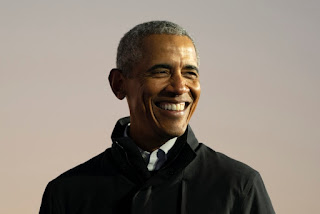
So, unfortunately, there's a lot worse to this than good. I could take a video of a voice impersonator saying something inflammatory or untrue that could destroy someone's reputation, get a picture of someone, and then paste them together. For instance, someone made Obama say that Trump was a dipshit. Obama wouldn't say that publically, but if someone wanted to make people hate or like Obama or any other celebrity or politician on false pretenses, they could just make a deepfake.

There's also the problem of people using deepfakes to violate people online. Deepfakes are rarely consentual, but some people go farther and will paste someone's face on naked pictures and videos of other people. Helen Mort's nudes were leaked online, except she had never taken nudes. Someone had taken non-explicit photos from her private accounts, including some where she was underaged, and encouraged people to put them on naked videos. Helen felt understandably humiliated, and this can happen to literally anyone. It's likely more common with famous people. 

That being said, I think everyone remembers where they'd be in school, and some unhealthy relationship would end and nudes would get leaked. Literally, when I was trying to find a link to provide as an example for this, I found actual links to literal child porn. But deepfakes might be the new age of leaking people's nudes. It might not be enough to never send people your nudes. I know I've never sent nudes. (I'm not saying this because this is a school related thing. I genuinely have bad enough trust issues that in my head, those who love me could hate me overnight, and I rarely feel safe even opening up to someone) 

Literally, my high school had this creep, I believe his name was Brandon. Brandon was nothing short of a self-centered, self-righteous manchild who had the intelligence of a toothbrush. He was sexist, racist, and homophobic as well. 

He had gotten in trouble already when I recorded him tearing down GSA posters and when he sent me a video of "him" flushing them down the toilet, I was able to determine that he had a female accomplice based on the fact that there was a pad\tampon trashcan in the background of the shot, and she eventually got in trouble too. He ended up not being very happy with me and threatening me over Instagram and telling me to kill myself. When I blocked his account, he made 3 more to keep harassing me, and I'd just keep blocking him. Eventually, he went away, but he is the kind of dude who, if the technology was invented, and he had more brains than a rubber band would've totally done deepfakes on myself and other people as well. 

He was a senior and over 18 at the time, and this is when Snapchat was introducing geostories, and the perimeter was around the school. Everyone on Snapchat who went to the school could watch the story and post to the colossal bitchfest. He ended up posting on there about how "if you have nudes, add me and send them." No one took him seriously, but sure enough, the next day, I'm seeing a bunch of people's boobs, butts, and other bits. He ended up just posting them to the public story for everyone to see. Keep in mind, a lot of these people I knew were underaged. Needless to say, he actually got arrested that night and expelled. People are crazy.

Something that is also wildly harmful with deepfakes? The ability to manipulate international political discourse. Do you remember way back in the day when Kim Jong Un was talking about how he'd nuke us? Well, imagine if someone had made a deepfake of him or Obama saying they were sending nukes, it would start a war before anyone would analyze the clip and realize it was fake. 


Monday, October 4, 2021

Blog 7 - Technology taught to me by someone else

Technology Taught To Me By Another 


Right, so as a little kid, I'll be honest. I pretty much taught myself everything basic when it came to technology. We didn't have much money at the time (as you can see by this pretty basic setup in the "computer room".) I remember we had Windows 95 at first, as I remember the starting sound distinctly. My parents didn't know much about technology back in the day, and apparently, I figured out how to lock them out of the computer, and I would do it repeatedly. I was such a devious child.

 However, what we had for a lot of my early childhood was Windows XP. Being a little kid, I basically taught myself how to animate PowerPoint, how to download and play games, and even MS Paint. I was a huge player of MMOs until my favorite one shut down.

I even taught myself how to do art. MS Paint can produce good art, but it's hard to. It's extremely basic and your tool options are limited. The site I use is a free one called Pixlr. It's a lot like Adobe Photoshop except it's free. It's hard to get inspiration to draw these days because of my declining mental health, but here is an OC I drew to the right named Talia. My friend who graduated from college with an art degree said I'm good, so I guess I am? 

But this blog is supposed to be about things others taught me with technology. I have no idea if this is supposed to be about communication or just general technology. So I'll just do general tech. 

In high school, I took a class called music tech where I could make music electronically. I absolutely loved it. I worked with Ableton Live 9 and 10 when it came out. I used a little mixing thing called a Push. It was my first time working with macOS. It was amazing. I have ADHD and because my grades were so stellar, and I was able to mask really well, I was undiagnosed until early this year. This class was the only class where I could actually focus for the entire class. I had gone through a lot of trauma early on in high school, and this was at the point where I had still not told anyone, and it was hard going through that stuff completely alone and scared, but this class was something I looked forward to as an outlet. I could be creative. I could make music. I could learn and felt like I was actually achieving something, as opposed to my other classes where I would get excellent grades but barely remember the material down the line. In my other classes, I'd not be able to pay attention but I'd understand the material when I'd do homework, do well on the tests, make good grades in the class, and then forget everything I learned. I felt like an impostor, but here, I was actually learning by doing the thing and I could be creative as well. Unfortunately, all the stuff I made is saved on a hard drive at home and home is 8 hours away for me. I miss this class so much


Something else that helped me with technology, or more specifically, someone else is my partner. I'm generally attracted to girls, but sometimes, on the rare chance, I'll think of a guy as attractive, and now I'm dating one. This is his setup on the picture to the right. (Yes I bought him the neon lights hehehehehehe)

 Growing up, I was friends with the weird people and not generally the people who were good at technology, because the technology wizards were generally rude and had a lot of prejudice. Windows has come a long way from Windows XP and I hadn't realized how much it had. My partner, who is a computer science student showed me a lot. On top of gaming stuff looking cool, he educated me on the basic concepts of what a CPU (or processor) is, or a GPU, or RAM, and what it all means. I really don't have extensive knowledge of technology by any means, but think I know more than the average person. I know how to research better and not just buy the first thing I see because it's the cheapest, because cheap doesn't always mean a good deal for what you get. There are a lot of components that go into each thing, and it sometimes depends on the thing. I usually will still go to him just to check that I'm right, or about stuff that I don't know. The complexity of technology in computers has grown exponentially over the last 20 years, and much quicker in the last 10.


Monday, September 27, 2021

Blog 6 - Rodger being Rodger

 Rodger's Diffusion of Innovations


So basically, any idea or change to society, people have to adapt to it and get used to it. Eventually, it reaches saturation, and very few, if any changes ever truly reach 100%. This can be used with tangible objects, like the TV or a dishwasher. It can also be used with ideas, such as the internet, the mail system, and banking. All ideas come, and then they either evolve into something unrecognizable to it's creators, or it just goes away.

Relating to Twitch, I'd say the Innovators were Justin and the other people who helped him to develop the website. The early Adopters were anyone who started broadcasting when the site was called Justin.TV. Once it got a lot of users and renamed to Twitch, it got into the early majority. With websites, it's hard to see where we are in this chart, as the internet is forever, but if a website does something horrible, it can get taken down, or people could stop using it and another site takes all their customers. Sometimes sites just decide to shut down on their own. But I'd say we are likely in the early majority right now. We have a lot of creators and a lot of people using the site. It's still mostly gamers, as when I asked the class who uses Twitch, it was a bunch of dudes who I assume game, and not the majority of the class.

Wacky thing: I'm doing this in my marketing class (My professor was zooming through the slideshow, and I could neither see it well because she can't design well, or write down what i could see because she'd just click to the next slide so fast and it was frustrating, so I gave up) and my professor just mentioned Roger's Diffusion of Innovations, and she also is connecting it to technology, but she isn't using it for websites. (But she's using it to explain Tennis?) Companies are generally banking on people in the early adopters group to try to spread the word about the product. Here are some from Twitch.  So that's nifty, I would say. The initial people who promoted Twitch are also all wealthy, successful, and doing a job they love. I feel like being an early adapter in something successful is something we all want to be, wether we know it or not, because wether it's "I did this thing before it was cool" or "I get paid because I took advantage of x thing early."


I feel like this also relates to stocks, as people try to invest in a brand which they think will do well, and if it takes off, they get a huge return in their initial investment. For example, when
Bitcoin (a cryptocurrency) was first coming out, it was less than a cent and people got on it, probably as a joke, and then it took off and they got wealthy. I remember when Dogecoin took off. I was on a voice call on Discord talking to my friend about stocks, and he had just convinced me that day to download Robinhood. I was still getting approved so I told him to check his phone to see what the price was. I bought $10 worth as soon as Robinhood approved me. To the right, you see my Robinhood investing (yeah I know it isn't a lot yet, but I'm trying to just figure it out.) but you see that it spiked when I first joined, and then it fell a little bit, and then really spiked again. (I was around $30, I think? My memory is horrible.) I'm hoping with Dogecoin, I'm an early investor and not that I failed to sell when I should've and that Dogecoin has peaked for all time. 


Wednesday, September 22, 2021

Blog 5 - Privacy

Privacy

I think everyone who uses the internet has a general understanding that privacy by corporations is a big joke. Most will go out and say that they sell your data to third-party companies, but no one knows what that means, and rarely does anyone actually go through and read the terms of service when signing up for something. 


I'm generally not someone who gets overly paranoid about that kind of thing. I already have very bad anxiety, and I know it isn't a real human looking at what I do, so I'm less scared. There are, however, a few examples of weird things happening with advertising and what I'm recommended. My freshman year roommate (she transferred) had lots of money and would buy expensive clothes a lot. I knew I couldn't afford what she could and our styles were drastically opposite (she's feminine and pink, and I prefer more androgynous stuff in darker colors) yet I started getting Gucci and Lululemon ads. I'm dating someone who is into Yu Gi Oh cards and I get ads on those, despite not really showing a huge interest in them. When I took French, I would get so many French ads. I also have a trans friend who has chest dyphoria and I tried to help her find stuff to help and long story short, I get rubber boobs ads now. I don't mind much considering I'm helping people I care about but... really?


It's almost shocking how much personal information we have online. I remember years ago, people got paranoid about FBI agents watching us through our webcams and people started putting up the little camera covers. My generation was largely unaffected by this and made memes because there's no way for everyone to be watched by a real person through their webcams at once. That would imply that half the world are actually FBI agents.

I do think it's important to know that your information isn't entirely private, but at the same time, saying that "everyone can see your emails" isn't true. I can't just go into my professor's email and see everything they send. If it's open, maybe, but it's not readily available for me to just search her up and find her stuff, unless the password somehow gets into a leaked password list by hackers. Bots can scan emails, but its not going to be available for those normal people who aren't looking to hack.

Sunday, September 19, 2021

Blog #3 - Key Post - 8 Values of Free Expression

8 Values of Free Expression

I'm going to ramble and just see where this goes...


Idea One: A Marketplace of ideas


This was brought about by a man named John Milton. In the reading, it had a term referred to as Aeropagitica. Starting from the beginning, Milton had written a polemic that was basically a rant about the loveless marriage he was in. When he published it, the Parlement thought that it was too controversial and they decided to pull it. Aeropagitica was a book he wrote in response basically calling the government out on their censorship. That too mysteriously disappeared. It took people awhile to truly appreciate the book. 

So, how is this relevant today? It's simple, really. I unfortunately sometimes accidentally click the Facebook app, and there are a lot of older people on there. Usually, Facebook is a colossal mess full of hate, rage, and anger. A lot of said hate, rage, and anger is directed at the app itself for censoring them, and they think that the government has to do with it. It doesn't though, and it makes no sense how they think it does. It's the app that doesn't like certain posts that could be misleading. While the government protects everyone's views, apps are private entities so they can choose not to protect certain things they don't agree with. Now, if the government DOES have influence on things, that's a whole different issue but no one can definitively say wether the government has influence on making apps ban certain people or not.

It's relevant today also because former president Donald Trump was banned from pretty much all of his social media after some of his Twitter posts may have incited the coup on January 6th. They made it clear that he was banned for inciting violence and they wish their platforms not be used for such purposes. Twitter had slapped "these election claims are disputed" labels on Trump's tweets about the election since November.


Idea Four: Self Actualization

This one is interesting, and as a psychology student, I have seen this before. This is the top of the pyramid in Maslow's Hierarchy of needs. It's interesting that this wasn't mentioned in your little bit in the reading about it. 
Basically, Maslow theorized that we as humans need to fill our basic needs before we move onto psychological needs and self-fulfilling needs. Our basic needs are what's needed so our bodies don't die. Without food, water, keeping warm, or sleeping, our bodies could physically give up on us. After that, is security and safety. Basically, without this, our bodies wouldn't kill us, but something or someone could. There is also the need for financial security, as without it, you may lose your home or your ability to get food or water or adequate rest. There are also healthcare needs that rope in with financial security, as long as you live in America.

Moving onto psychological needs, the need for self-esteem and the need for belongingness and relationships can be interchangeable. But the belongingness is a need to be connected with family, friends, romantic\sexual relationships, a "friend group," and potentially religion and a church. Self-esteem is used to determine a person's self-worth and value. Having good self-esteem may include feeling self-confident, feeling secure in your own identity, feeling like you belong, and feeling like you are smart in whatever you're doing. 

Finally, you have self-actualization. It's being the best you can be, it's being authentically yourself. It's fully using your abilities, your talents, your potential. It's something that gives you true happiness and the true meaning of life. Yet, at the end of the day, many people in America aren't living anywhere close to this. Others step on people to get to this. It really sucks. We need to have the ability to create our own identity and people really value that. 

In western culture, intrinsic value is what people strive for. If you sit down and have to write certain things about yourself, a lot of them may be intrinsic values. Intrinsic is valued in one's own right. and extrinsic values are based on what others tell you. An example of an intrinsic value would be that you are an athlete, or a chef, or a nice person. Extrinsic is that you're a good friend, a mother, a daughter, a son, a grandparent. Creating your own identity is based on intrinsic value. 


Just More Rambling

I think some of the other important things are how we need to be tolerant of others, as in idea 6. What sucks, however, is how some people's ideas are intolerant of others. How should we be tolerant of other's intolerant ideas? How is that fair to anyone? Like it is understandable that the first amendment protects people's views, but why should we be protective of their views. 


Wednesday, September 15, 2021

Blog #4 - Key Post - Twitch

Twitch.TV


History of Twitch


Twitch originally started in 2007 as Justin.TV. The site was created by Justin Kan, Emmett Shear, Michael Seibel, and Kyle Vogt. It was a site to live broadcast, similarly to Twitch. Each user's profile was referred to as a "channel," similar to both Twitch and Youtube. 

The first user, of course, was Justin, who broadcasted his life. The broadcasting style was known as "lifecasting" or "lifestreaming." Similar to a vlog (video blog), it focused on the mundane aspects of everyday life, but it was unedited, and people would watch his life as it happened. 

In October of 2007, he opened the site for anyone to live stream. This made the site way more popular, acquiring over 1 million registered users. They also added the live chat along with the stream, which was a very abstract concept at the time. 

There were many categories of streams, but the most popular kind was gaming, and in 2011, they made a spin-off site called "Twitch.TV." Twitch got very popular, and by the beginning of 2014, it became the 4th biggest source of internet traffic. Justin.TV was shut down in late 2014, and Twitch became the main site. Amazon purchased it for 970 million dollars, and since then, has been purchasing other companies and growing its enterprise.

Impact of Twitch

People want to see livestreaming. Approximately 82% of people enjoy livestreams over normal social media posts. People also tend to be more engaged with livestreams, watching them 10-20 minutes longer than normal videos that are on demand. It gives a more personal relationship between streamer and viewer with the live chat and the ability to donate money to your favorite streamers and to subscribe to them.

With Covid-19, the amount of livestreaming has gone up by a lot, not only with gaming and people watching gamers when they are in quarantine, but also with different services in everyday life. Churches typically livestreamed their services when they weren't allowed to meet, Business venues were usually streamed online, President Joe Biden's presidential rallies were even mostly streamed online. Some music venues were also online. 

With some people unable to always go to these events, and the money spent on livestreaming equipment, I think livestreaming will stay prevalent in a post-covid world. There are a lot of people who don't have cars, or who are too old to drive, or who got sick the day of an event. This is also a world where ease of access and convenience and equal opportunities are important.

If a student gets cancer and they are stuck in the hospital, they can still take a class remote to the best of their ability, and potentially not fall a year behind in school. If an old person has no spouce and their family is far away and they can't drive, they can watch church remotely or watch their grandkid's wedding remotely. 


If someone's graduation is very far from reletaves and they can't afford the plane ticket down to watch it, they can watch it virtually.If I feel lonely, I can hop onto
Corpse, CallMeKevin, or Lilypichu's streams and feel like I'm just hanging out with them. I've even seen house representative 
Alexandria Ocasio-Cortez stream before.


Friday, September 10, 2021

Blog #2

 Supreme Court


Something I didn't know about the supreme court

I didn't know that there weren't always 9 court justices, as the original had only 6 people, and that they kept changing the number. the reason it changed a lot was that it wasn't exactly mentioned in the constitution how many people are needed on said court. The first time it changed was when John Adams was leaving office and decided to try to screw Thomas Jefferson over with the judiciary act of 1801.  They kept increasing the number as the nation got bigger. and then during Abraham lincoln's term, the number rose to 10 justices, to try to keep an anti-slavery majority. Once Lincoln got assassinated, Andrew johnson was trying to undo what president lincoln and the "radical republicans" had done, and as a result, his court was lowered to 7. Once Ulysses s. grant became president, however, Congress gave him 9 members.  

The court has remained as having 9 justices since then, but President Roosevelt tried to raise the justices to 15 in his "great new deal." This attacked anyone over 70 currently serving on the court. he tried to appoint 6 more justices for every current justice on the court for everyone older than 7o years old. He said they "needed help managing tasks." They were all up to date on their tasks. obviously, FDR's proposition met immediate opposition, and it never even made it to congress.

When the original had only 6 people, they divided the U.S. into 3 regions and had the court justices meet in Washington twice a year. The 3-3 split possibility wasn't a huge concern for them because the opinions weren't as polarizing as they are today. 


The most important takeaway

The supreme court is appointed by presidents, and once they're appointed, there's no way to get them out of the court unless they retire or die. That is scary. The current supreme court could end up screwing over women's rights, and there is absolutely nothing we can do about it. I did a rant about this on discord, actually, and I'm going to copy it, remove the swear words, and paste it here.

so, reasonable people can disagree about when a zygote becomes a human life. that's fine and it's a philosophical debate. however, it doesn't matter whether you believe a fetus is equivalent to an adult. it doesn't obligate the mother to sacrifice her bodily autonomy for another.

bodily autonomy is SUPER IMPORTANT in the constitution's right to privacy, and that's protected by the constitution. this was decided in Griswold v Connecticut, which granted the right for married couples to buy and use contraceptives without the government's interference. It also was decided in McFall v shrimp, and this prohibited the right for anyone to force anyone else to donate body parts, even if it's to save another. It also was decided, of course, in roe v wade.

let's pretend you're a perfect donor for a child who needs bone marrow to save their life. in this scenario, the child will die 100% if you don't donate. no other person on the planet is a close enough match to save the child's life. if you were to decide you didn't want to donate your marrow to save the child, no matter the reason. if the rationale behind the reason was flimsy or unrealistic, or if the child is a genius or prodigy or anything else, it doesn't matter. the decision to donate HAS to be voluntary or it will actually be unconstitutional.


This right is even extended to people after they die! when you get your driver's license, they ask if you want to be an organ donor. I, personally said yes because when I die, I won't need my body parts anymore. I'll be dead. but some people say no, for any reason. if you don't consent to be an organ donor while you're alive, they can't harvest your organs after you die, no matter how useful they may be to someone who needs them. 
it's the LAW, and breaking that law could have serious consequences. 

the use of a woman's uterus to save a life is no different from the use of her bone marrow to save a life, in that it must be offered voluntarily. now, you have the right to say that morally, a woman has to carry to term, and not doing so would be immoral. that's a philosophical debate, and anyone has the right to pick whatever side they wish. but LEGALLY? it HAS to be the woman's choice whether to carry to term or not. the decision could be made for the "right" or "wrong" reasons or anything in the middle, but it HAS to be her CHOICE, and protecting her bodily autonomy means that the law has to be on her side. 

that's what being pro-choice means. 

it baffles me that I understand this clearly at the age of 20, but lots of adults who are older and have more experience in life don't get it.


Surprising thing

So what did I find a bit surprising? Probably just how unmentioned the supreme court was in the constitution. Because of how little it was mentioned, it just kept changing because there was no way the founding fathers specified it be. It also was super insignificant at first, and only really became important when human rights became involved. It's also just concerning how many presidents used it for their own personal gain. Something else that I think is a bit shocking is how they only met twice a year initially, and how they all didn't attend all the time. Now the justices eat, sleep, and breathe in the law. It's evolved likely beyond what the founding fathers would've visioned. we don't know what they truly visioned, however, just because it wasn't that specific in how it was to be set up. 

The Original supreme court was so janky and it took almost 100 years to refine it because of how unspecific it was.


How the video changed how I view the court

The video had a bunch of justices sitting in a circle talking about how they all are friends and acknowledge that they try to see each other in good faith. They all shake hands before each session and realize they all have a common goal of making the country better. It makes me just wonder how true their statements are. the video is very obviously old, and it makes me wonder if things have changed. the supreme court saw each other as humans then, and politics today remove the humanistic aspect. Politicians just seem to want to control, and they don't even look at the other side. No one ever thinks of why the other person thinks and feels the way they do. That's going to be a huge problem as time goes on. I don't honestly think the video changed how I view the court as much as it signaled that my views of the supreme court will evolve as time goes on. Right now, I'm not that big of a fan, but perhaps in the future, that will change. It all depends on who is in it. I hope eventually, human rights won't be a concern that the court deals with.


Final Blog Post

  Final Blog (rant) Post I'm going to touch a bit on that video first. First off, the art style reminds me a lot of this video . Second...